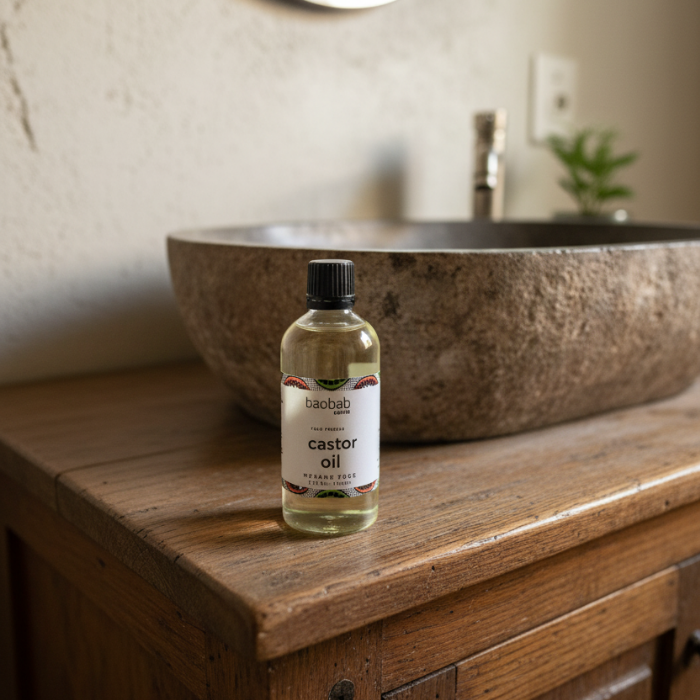

Why Castor Oil is a Must-Have for Natural Hair
The Liquid Gold of Africa
For generations, the rhythmic sound of seeds being crushed has been a staple in African households. Long before it was a global "superfood" for hair, castor oil was our grandmother’s best-kept secret for thick edges and healthy scalps.
Today, as the natural hair movement in Zambia reaches new heights, this "Liquid Gold" is making a massive comeback. From the salons of Rhodes Park to the local markets of Lusaka and Copperbelt, Zambian women and men are reclaiming traditional beauty rituals. Whether you are rocking a tapered cut, long locs, or a voluminous 4C afro, castor oil is the heavy-duty hero your routine has been missing.
In this deep dive, we explore why this thick, amber oil is more than just a kitchen staple,it is a scientific powerhouse for hair health.
Section 1: The Science of Ricinoleic Acid
To understand why castor oil works, we have to look past its thick texture and into its molecular structure. Unlike many vegetable oils that simply sit on top of the hair, castor oil is a complex mixture of fatty acids, the most important being Ricinoleic Acid.
The Circulatory Catalyst
Ricinoleic acid makes up approximately 90% of the fatty acid content in castor oil. When massaged into the scalp, it acts as a natural vasodilator. This is a scientific way of saying it helps open up the blood vessels.
When blood vessels are dilated, circulation to the scalp increases. This is crucial because your hair follicles are fed by tiny blood vessels called capillaries. Better blood flow delivers a "nutrient buffet" of oxygen and proteins to the root of the hair. This process:
- Triggers the Anagen Phase: This is the active growth phase of the hair cycle. By stimulating the follicles, castor oil can encourage hair to stay in the growth phase longer.
- Balances Scalp pH: High acidity or alkalinity on the scalp can lead to dandruff and itchiness. Ricinoleic acid helps balance the scalp's natural pH, creating the perfect environment for growth.
- Antimicrobial Action: Castor oil possesses antifungal and antibacterial properties. In a tropical climate like Zambia, where sweat and humidity can lead to scalp issues, applying castor oil helps keep the scalp clean and free from infections that stunt hair growth.
Section 2: Mastering the Seal with the LCO/LOC Method
For those with 4C hair, the biggest challenge is moisture retention. Because our hair coils so tightly, the natural oils (sebum) produced by the scalp struggle to travel down the hair shaft. This often leads to "crunchy" hair that breaks easily.
This is where the LOC (Liquid-Oil-Cream) or LCO (Liquid-Cream-Oil) method comes in. Because of its thick, viscous consistency, Baobab Swirls Castor Oil acts as the ultimate sealant. It does not just "grease" the hair; it creates a hydrophobic (water-repelling) barrier that prevents moisture from escaping.
How to Execute the Perfect LCO Method:
- L (Liquid/Hydration): Start with clean, damp hair. Use water or a water-based leave-in conditioner. This is the moisture you are trying to trap.
- C (Cream): Apply a thick, moisturizing hair butter or cream. This adds softness and manageability.
- O (Oil): This is the final step. Smooth a small amount of Baobab Swirls Castor Oil over the hair strands. The oil molecules are large enough to fill the gaps in the hair cuticle, effectively "locking" the liquid and cream inside.
Why it works for Zambian Naturals: Our environment can be dry, especially during the "cold-dry" and "hot-dry" seasons. Without a heavy oil like castor oil to seal the hair, the dry air will literally suck the moisture out of your curls, leading to breakage. By using castor oil, you ensure your hair stays supple for days rather than hours.
Section 3: Eyebrows and Lashes – The DIY Growth Serum
The benefits of castor oil are not just limited to the hair on your head. Many Zambians are turning away from expensive, synthetic lash serums in favor of natural alternatives. The same ricinoleic acid that stimulates the scalp works wonders on the smaller follicles of the eyebrows and eyelashes.

The "Lusaka Glow" DIY Serum Recipe
If you want thicker brows and longer, darker lashes, consistency is key. Here is a simple, effective recipe using locally available ingredients.
Ingredients:
- 2 tablespoons Baobab Swirls Cold-Pressed Castor Oil (The base)
- 1 capsule Vitamin E Oil (Acts as an antioxidant and preservative)
- 3 drops Rosemary Essential Oil (To further boost circulation)
Instructions:
- Clean an old mascara wand or buy a pack of disposable spoolies.
- Mix the castor oil and Vitamin E in a small amber glass bottle (light can degrade the oil).
- Every night after washing your face, dip the wand into the serum and brush it through your brows and along the lash line.
- Be careful not to get it inside the eye!
Within 4 to 6 weeks, you will notice that the hairs appear darker and more robust. This is because the oil coats the hair, preventing premature shedding and giving the appearance of thickness.
Section 4: Dealing with Edges and Traction Alopecia
A common concern in the Zambian hair community is the loss of "edges" (the delicate hair along the hairline) due to tight braiding, heavy weaves, or chemical relaxers. This is known as Traction Alopecia.
Castor oil is the gold standard for edge recovery. Its density provides a protective layer against the friction of scarves and pillows, while its nutrient profile strengthens the fragile "baby hairs."
The Edge-Rescue Routine:
- Dampen your hairline slightly with a warm cloth to open the pores.
- Apply a pea-sized amount of castor oil to your fingertips.
- Massage in a circular motion for 2 minutes daily. The massage is just as important as the oil, as it manually stimulates blood flow.
Section 5: Why Cold-Pressed Quality Matters
Not all bottles labeled "Castor Oil" are created equal. If you walk into a pharmacy or market, you might find refined oils that are clear and thin. These should be avoided for hair care.
The Extraction Process
- Refined Oil:This is often extracted using high heat and chemical solvents like hexane. This process destroys the delicate vitamins and fatty acids, leaving you with "dead" oil.
- Cold-Pressed Oil:This method involves pressing the castor seeds without adding heat. It preserves the integrity of the ricinoleic acid and the natural minerals.
Baobab Swirls focuses on cold-pressed quality. When you use a high-quality, locally sourced oil, you are getting a product that is:
-
Hexane-Free: No harsh chemicals near your brain or skin.
-
Nutrient-Dense:High levels of Vitamin E and Omega fatty acids.
-
Environmentally Friendly: Reduced carbon footprint by supporting Zambian production rather than importing from overseas.
Conclusion: Reclaiming Our Roots
Castor oil is more than a beauty trend; it is a bridge to our heritage. In a world of synthetic silicones and sulfates, returning to the "Liquid Gold of Africa" allows us to care for our 4C hair in the way nature intended. By understanding the science of ricinoleic acid, mastering the LCO method, and choosing cold-pressed quality, you are not just just styling your hair you are nourishing it.
The journey to long, healthy hair in Zambia does not require expensive imported products. It requires patience, consistency, and a bottle of high-quality castor oil.